

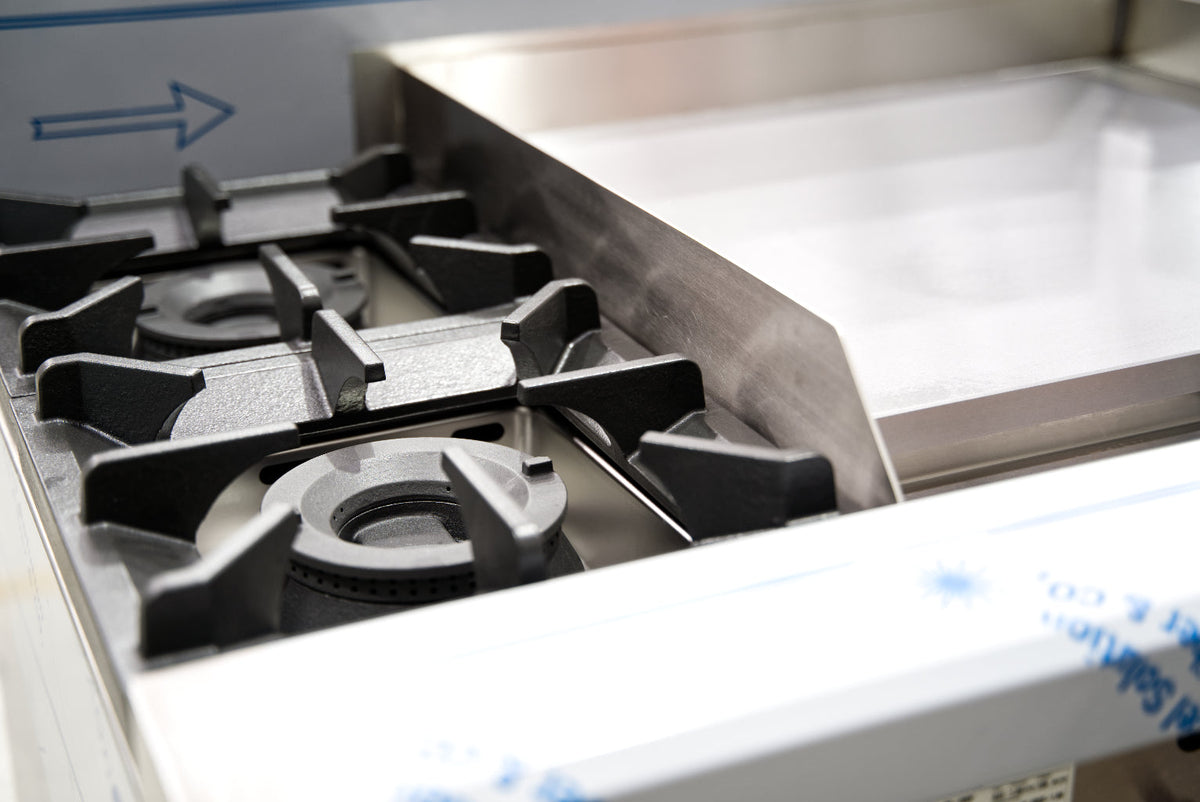
In a professional kitchen, space is a finite resource, and every square inch needs to justify its existence. The common approach where piecing together a range here, a fryer there, and a standalone chargrill elsewhere often results in a "Frankenstein" layout. You end up with inconsistent depths, uneven surfaces, and a disjointed workflow. This isn't just an aesthetic issue; it’s a massive barrier to efficiency.
The power of modular design is about building a cohesive, seamless cookline where each piece of equipment is engineered to work as part of a whole. When your cooktops, fryers, and oven ranges are built to share the same footprint and height, the kitchen stops being a collection of separate obstacles and becomes one unified, high performance station.
This modularity is the foundation of a faster, more logical service. It allows you to plan your station based on the sequence of your prep rather than the limitations of mismatched hardware. Whether you are running a high volume fry station or a multi-tiered oven range, a modular setup ensures that the entire line maintains a professional, consistent flow.
Modular design isn't about making every unit identical; it’s about ensuring that your specialty stations such as your chargrills, your high performance fryers, and your precision burners all exist within a clean, logical architecture. It transforms the kitchen from a collection of isolated appliances into a singular, well oiled machine where your team’s movement is supported, not interrupted, by the hardware.


