

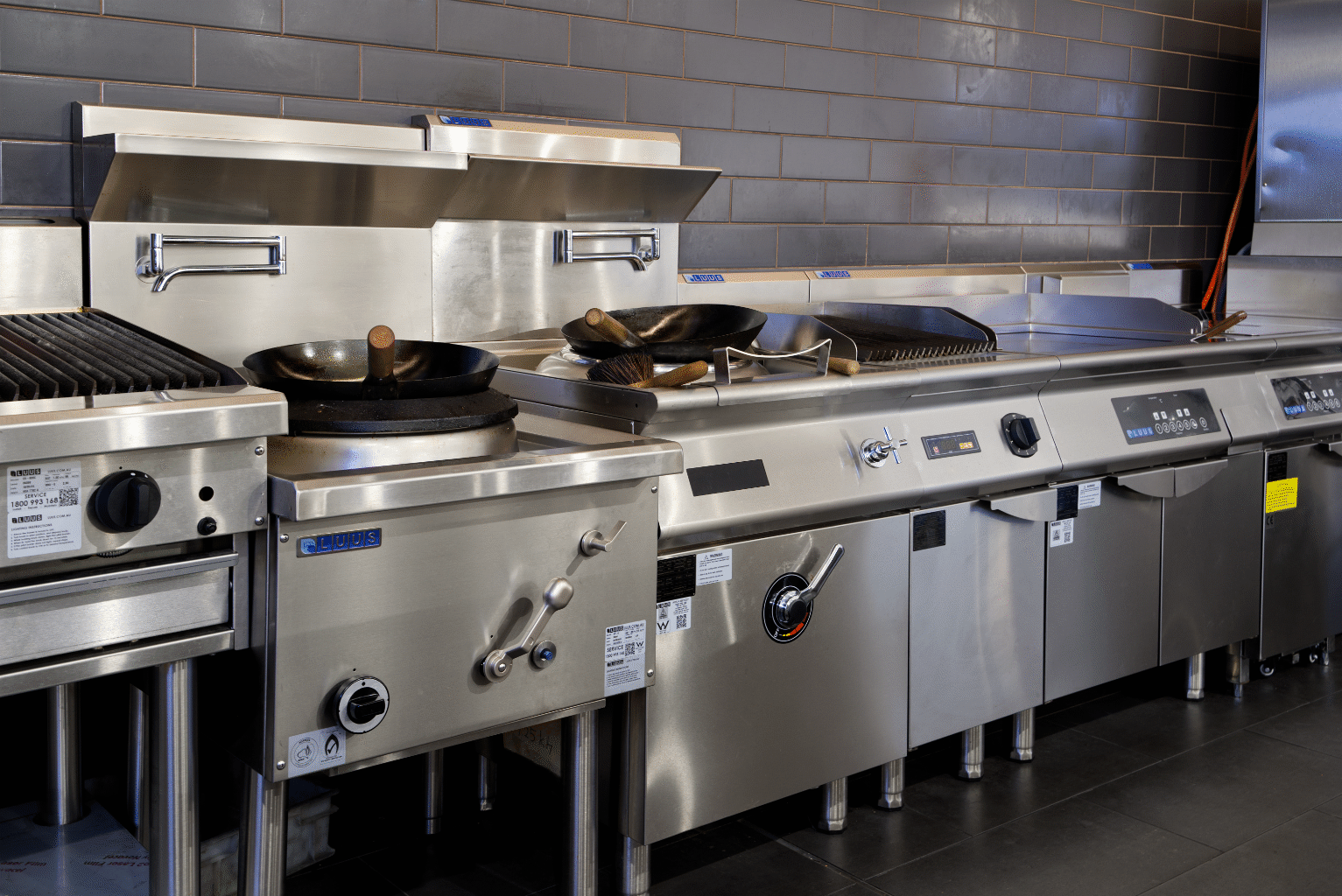
Walk into most kitchens, and you’ll see a collection of mismatched units with different heights, varying depths, and a dozen different ways to turn them on. Every piece of equipment seems to have its own logic, and it’s usually crammed together in a way that creates gaps, hygiene traps, and wasted movement. It turns a space that should be a high performance engine into a collection of clunky obstacles.
A better way to approach a build is to stop looking at the kitchen as a series of separate boxes and start seeing it as one unified platform. When the equipment is designed to sit together, you stop wasting energy navigating the space. You get a clean, uninterrupted line that actually supports the way a team moves during a rush.
This isn't about just making things look neat. It’s about how that uniformity changes your workflow. When you move a pot from a range to a griddle or a fryer, the height remains constant. There’s no tilting, no awkward lifting, and no second guessing where to set things down. Every inch of that counter becomes usable space, and every part of the line feels like an extension of the one next to it.
The goal is to eliminate the friction that comes from a "pieced together" kitchen. When the entire station speaks the same language, the physical load on the team drops, and the speed of the service naturally increases. It’s a shift from managing a mess to operating a system that works with you, not against you.


