

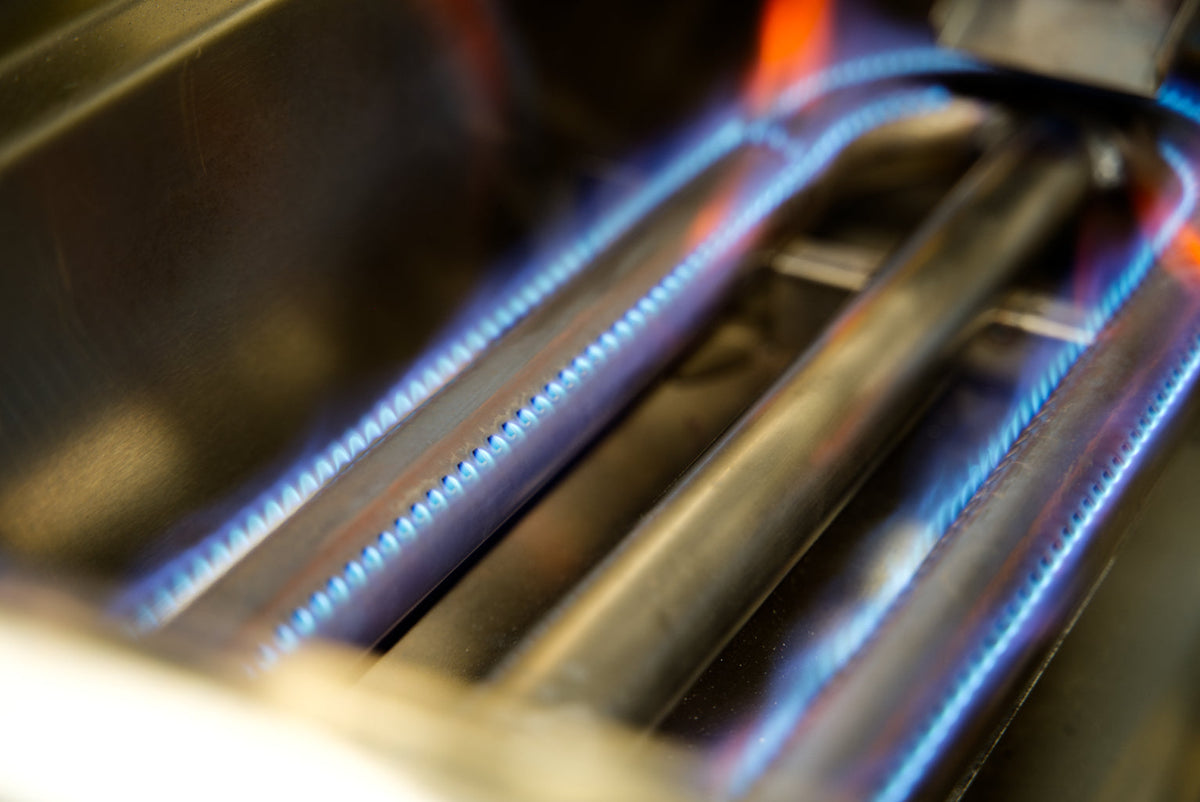
When we talk about thermal integrity, we aren't just talking about how hot a unit gets. We are talking about the consistency, retention, and management of heat within the entire cookline. A high performance kitchen fails when it loses control of its thermal environment; like when a griddle has cold spots, a fryer struggles to regain temp between batches, or the heat from a chargrill bleeds into the adjacent station.
The architecture of thermal integrity is the silent work happening inside our professional series. It’s the precision in the heat exchanger design, the thickness of the insulation, and the way we control airflow to ensure that the cooking surface stays exactly where you need it, even when you're loading it to full capacity. If the heat isn't stable, you’re constantly compensating by turning knobs, moving product, and guessing at your cook times.
When the thermal architecture is sound, the heat becomes a constant. You know exactly how a sear will perform on the chargrill and how your stocks will simmer in the range, regardless of how heavy the service is. It removes the variables that force a chef to babysit their equipment.
By designing for thermal integrity, we provide a stable, predictable platform for your team. You stop fighting the equipment to get the results you want and start using that consistent thermal baseline to drive speed and quality. It’s the difference between a kitchen that fluctuates with the pressure of the shift and one that dominates it.


