

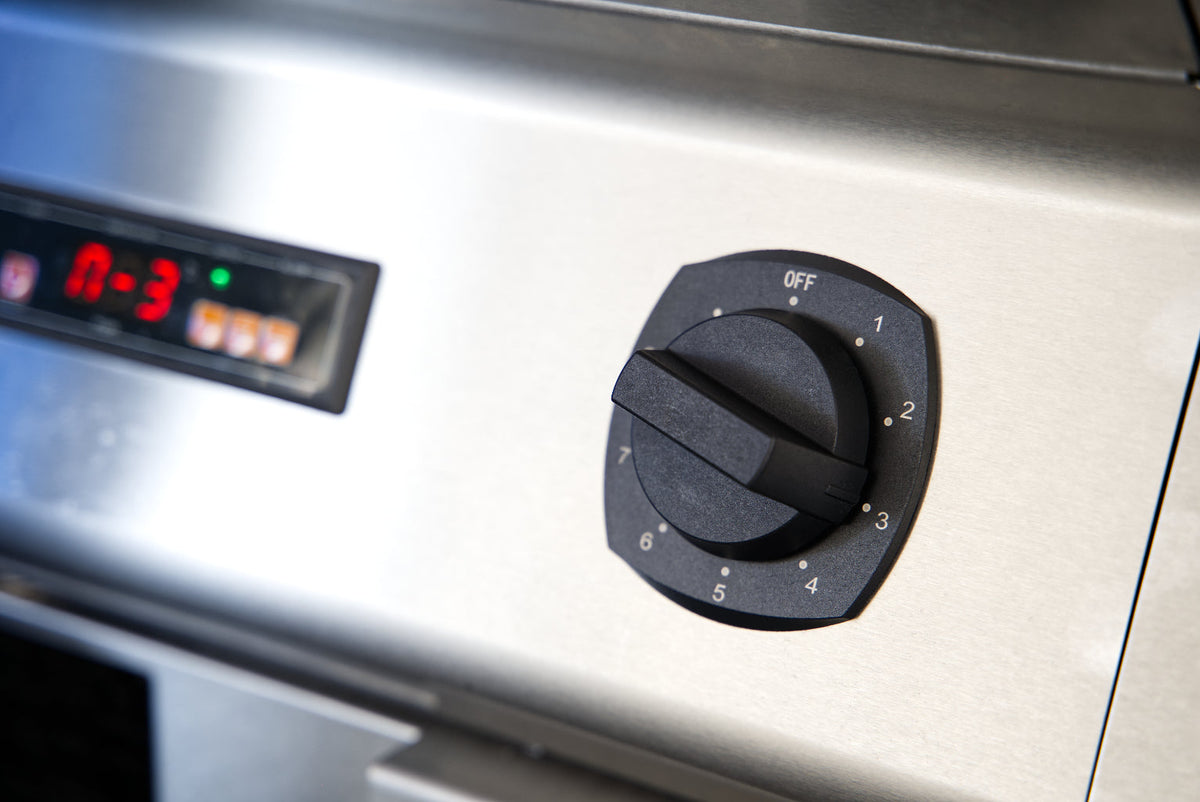
There’s a long standing habit in this industry of measuring a kitchen by the raw power of the burners. We’ve all seen it: the bigger the BTU output, the "better" the range. But if you’ve spent any time working a high volume service, you know that raw power is rarely what actually solves a problem. In fact, most of the time, brute force just creates more work.
When you have a burner that’s effectively an open furnace, you aren't really cooking with precision; you’re managing a wildfire. You spend half your service fighting the equipment when you're sliding pans on and off the heat, waiting for the metal to cool down, or cranking the dial and hoping the pan recovers quickly enough. It’s tiring, it’s inconsistent, and it leads to more wasted ingredients than most owners care to admit.
Cooking at a professional level is all about repeatability. If you’re searing a scallop or reducing a sauce, you need the heat to be exactly where you set it, every single time. That’s why we focus on precision rather than just dumping raw heat into the room. When the equipment is tuned to deliver the exact amount of energy needed for the task, you stop fighting the stove and start focusing on the plate.
A range that gives you total thermal control lets you keep your rhythm steady, no matter how busy the dockets get. You don't need a blast furnace to get a perfect result, you just need a tool that reacts the moment you tell it to. For us, that’s where the real performance comes from. It’s not about how hard you can crank the heat; it’s about how much control you can maintain while you’re in the middle of a rush.


